
-

Tenascin-C (Domain B) (4C8MS) Anti-Human Mouse IgG MoAb
Tenascin-C (TN-C) is a component of the extracellular matrix (ECM) that has been shown to be involved in tissue interactions during fetal development and oncogenesis. It is glycoprotein consisting of...
Add to Cart$596.00 -

TEK/Tie-2 (2A1) Anti-Human Mouse IgG MoAb
TEK, also known as Tie-2 (Tyrosine kinase with Ig-like loops and Epidermal growth factor homology domains-2) and CD202b, is a 145 kDa receptor tyrosine kinase expressed on endothelial cells and...
Add to Cart$596.00 -

Anti-S-100 Protein (2A10) Mouse IgG MoAb
S100 proteins (16 members) show a very divergent pattern of cell- and tissue-specific expression, of subcellular localizations and relocations, of post-translational modifications, and of affinities...
Add to Cart$596.00 -

Anti-S-100 Protein (2A10) Mouse Ascites MoAb
S100 proteins (16 members) show a very divergent pattern of cell- and tissue-specific expression, of subcellular localizations and relocations, of post-translational modifications, and of affinities...
Add to Cart$596.00 -

Rad51 (1B1) Anti-Human Mouse IgG MoAb
The highly conserved Saccharomyces cerevisiae Rad51 protein plays a central role in both mitotic and meiotic homologous DNA recombination. Seven members of the Rad51 family have been identified in...
Add to Cart$596.00 -

Anti-Platelets (KOR-P77) Mouse IgG MoAb
Among myelocytic leukemia, megakaryocytic leukemia is caused by the canceration of megakaryocytes or megakaryoblasts which produce platelets. Some platelet antigens are used for the search of...
Add to Cart$596.00 -

Parkin (5A1) Anti-Human Mouse IgG MoAb
Parkinson's Disease (PD) is a relatively common neurodegenerative disorder, which is characterized by the loss of midbrain dopamine (DA) neurons and the presence of Lewy bodies, proteinaceous...
Add to Cart$596.00 -

Parkin (1A1) Anti-Human Mouse IgG MoAb
Parkinson's Disease (PD) is a relatively common neurodegenerative disorder, which is characterized by the loss of midbrain dopamine (DA) neurons and the presence of Lewy bodies, proteinaceous...
Add to Cart$596.00 -
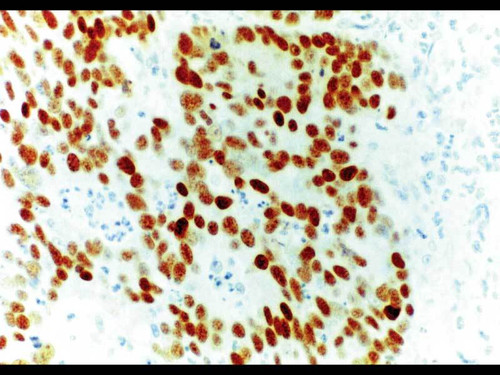
p53 (Bp53-12) Anti-Human Mouse IgG MoAb
At first, p53 was found not as a tumor suppressor gene product but as a cell protein of 53kDa that bind with the large T antigen of DNA type tumor virus SV40. Though at that time p53 was considered...
Add to Cart$596.00 -

Anti-Osteopontin N-Half (34E3) Mouse IgG MoAb
Osteopontin (OPN) is a secreted glycoprotein that was originally isolated from bone. Its molecular weights have been reported in the range of 66 kDa to 44 kDa depending on glycosylation and...
Add to Cart$596.00 -
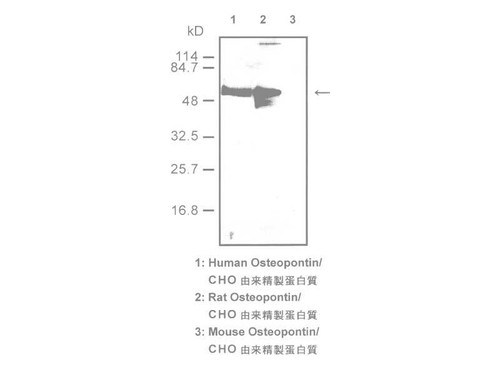
Osteopontin (1B20) Anti-Human Mouse IgG MoAb
Osteopontin (OPN) is a secreted glycoprotein that was originally isolated from bone. Its molecular weights have been reported in the range of 66 kDa to 44 kDa depending on glycosylation and...
Add to Cart$596.00 -

Osteopontin (10A16) Anti-Human Mouse IgG MoAb
Osteopontin (OPN) is a secreted glycoprotein that was originally isolated from bone. Its molecular weights have been reported in the range of 66 kDa to 44 kDa depending on glycosylation and...
Add to Cart$596.00

Monoclonal Antibodies
Monoclonal antibodies (mAb or moAb) are derived from a single B-cell parent clone and therefore only recognize a single epitope per antigen.
These B-cells are immortalized by fusion with hybridoma cells, allowing for long-term generation of identical monoclonal antibodies.
Monoclonal antibodies specifically detect a particular epitope on the antigen and therefore are less likely than polyclonal antibodies to cross-react with other proteins.
IBL-America offers a wide range of monoclonal antibodies that can be used in the research and development of multiple laboratory testing applications.